

A portable washer is a compact, movable washing machine for small spaces and on-the-go laundry.
I’ve tested and used multiple models, and I’ll walk you through what is a portable washer, how it works, who it fits, and how to pick and care for one. This guide blends hands-on tips, clear comparisons, and practical buying advice so you can decide quickly and confidently whether a portable washer is right for your life.

What is a portable washer?
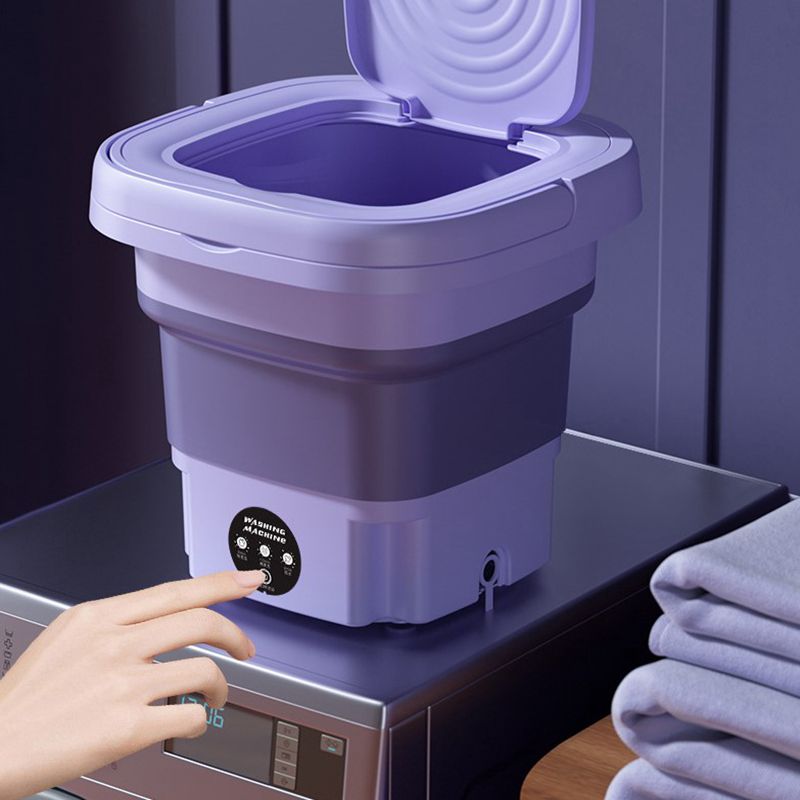
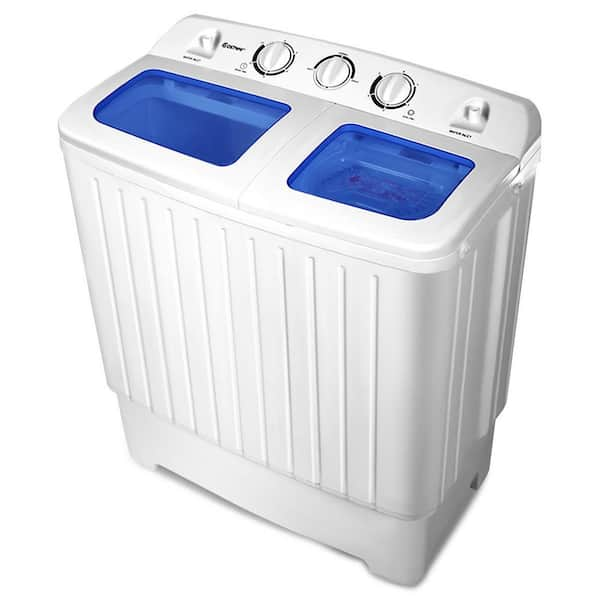
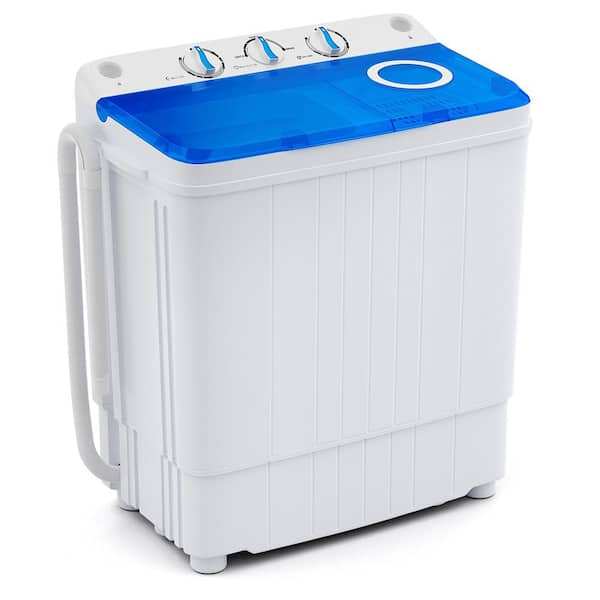
A portable washer is a small washing machine designed to be moved and used where space or hookups are limited. It cleans clothes like a regular washer but uses less water, less power, and fits in tight spots. Many models plug into a standard outlet and drain into a sink or tub. They range from simple twin-tub units to compact all-in-one washers with spinning and drying features.
I’ve used a portable washer in an apartment and in an RV. They are easy to set up and save trips to the laundromat. For many people, a portable washer is the difference between hand-washing and a real wash cycle.
How portable washers work
Portable washers clean clothes with the same core steps as regular washers: fill, agitate, rinse, and spin. The difference lies in scale and hookups. Most models draw water from a faucet or fill manually. After washing, they pump water out through a small hose and can spin-dry clothes to reduce drying time.
Common types of portable washers
- Compact top-load washers
- Single-chamber units that wash and spin in one tub.
- Twin-tub washers
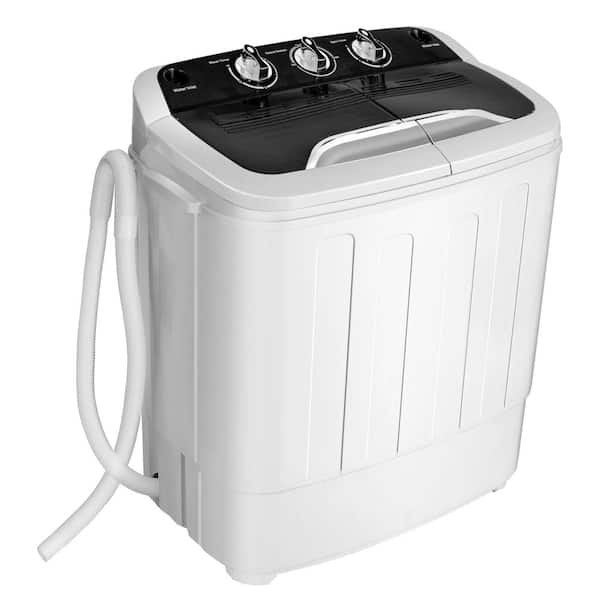
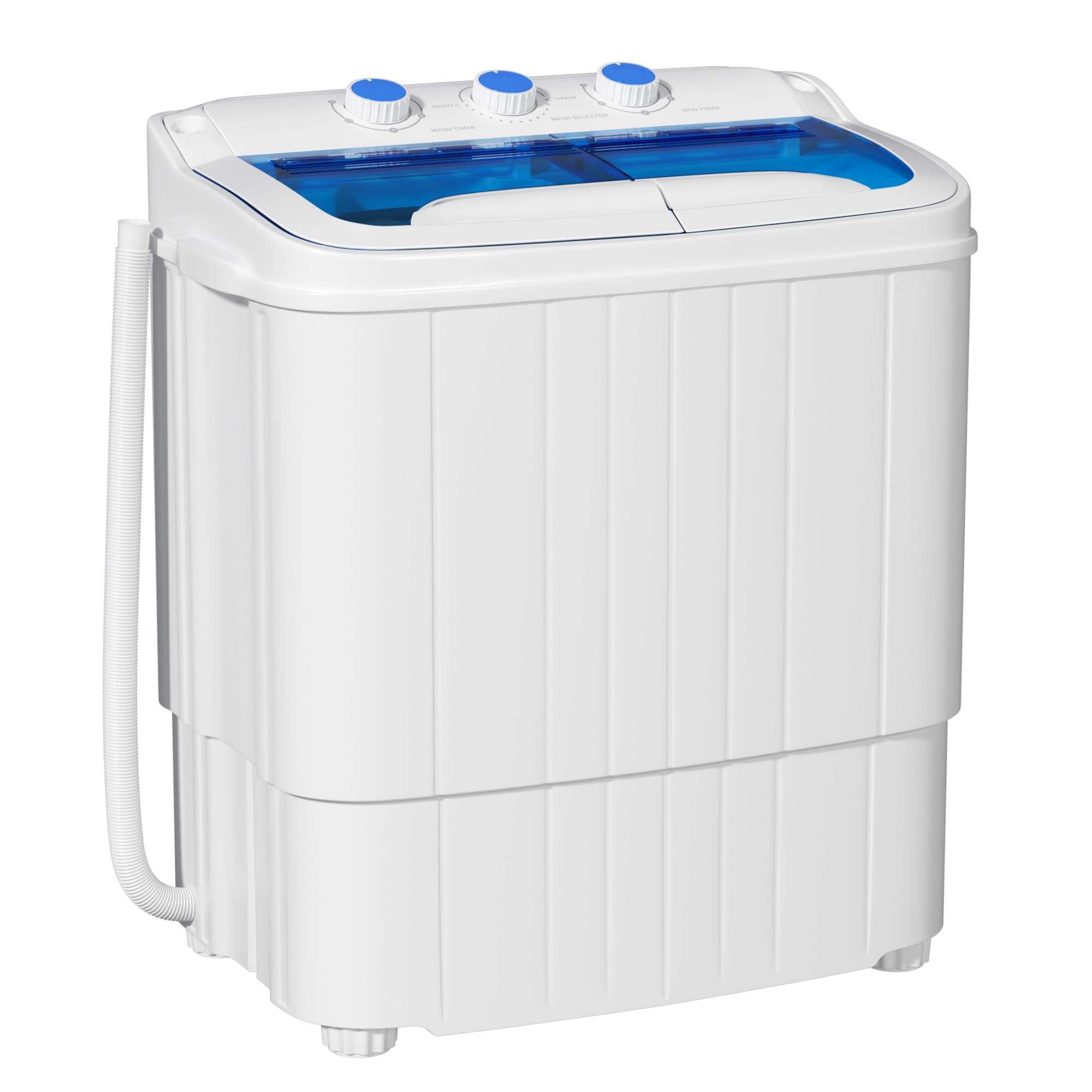
- Separate tubs for washing and spinning; you move clothes from wash to spin manually.
- Countertop or mini washers
- Very small units for delicates and a few items.
- Combination washer-dryers
- Offer a small drying function but take longer to fully dry clothes.
My experience: twin-tub units gave faster spin times, while all-in-one compact washers were easiest for daily use. Expect slower cycles than full-size machines, but the convenience often outweighs that.
Do portable washers need a special hookup?
Most portable washers use a standard faucet adapter and drain hose. Some plug directly into the sink faucet; others have a hose that connects to a faucet with an adapter. A few require manual filling and draining.
Can portable washers handle large loads?
Portable washers are made for small loads. You can wash towels or a light load, but bulky items like king-size comforters will not fit well or wash evenly.
Are portable washers energy efficient?
Yes, portable washers generally use less water and less electricity per load than full-size washers. Efficiency varies by model and cycle length.

Benefits of a portable washer
- Space saving
- Great for apartments, tiny homes, and RVs where a full washer won’t fit.
- Lower upfront cost
- Much cheaper than a full-size washer or in-unit laundry install.
- Portability
- You can move it between rooms or take it on trips.
- Water and energy savings
- Uses less water and power for small loads.
- Convenience
- Quick washes at home remove the need for frequent laundromat trips.
From my tests, the convenience of washing a few items midweek was the biggest benefit. It cut time and stress during busy weeks.
Limitations and trade-offs
- Small capacity
- You must run more loads if you have a family or many linens.
- Longer cycles
- Compact motors and smaller tubs often mean longer wash times.
- Noise and vibration
- Portable models can vibrate more, especially during spin.
- Drying limitations
- Most do not fully dry heavy items; you may need a dryer or hang dry.
- Durability
- Some lower-cost units wear faster than full-size washers.
Tip: Balance your needs. If you wash a few items weekly, a portable washer is ideal. If you have a large household, it may slow you down.
Who should buy a portable washer?
- Renters without in-unit laundry
- RV and van dwellers
- Students in dorms or shared housing
- Tiny-home owners and minimalists
- People who need a second, flexible washer for delicates
I personally recommended a portable washer to friends moving into a studio apartment. It saved them time and money. For travel or seasonal living, a compact unit often pays for itself quickly.
:max_bytes(150000):strip_icc()/spr-black-decker-small-portable-washer-rebecca-goldsmith-01-ed8f8fea202a40ceb9844e1ceab00548.jpeg)
How to choose and buy a portable washer
Key features to evaluate
- Capacity
- Measured in pounds or liters. Match it to your typical load size.
- Power source
- Standard 120V plug or battery/12V for some RV models.
- Fill and drain options
- Faucet adapter, manual fill, or direct hookup.
- Spin speed
- Higher RPM means drier clothes after spin.
- Dimensions and weight
- Ensure it fits your space and can be moved easily.
- Noise level
- Look for vibration control or rubber feet.
- Controls and cycles
- Simple dials vs digital settings—choose what you’ll use.
- Warranty and parts
- A longer warranty signals better build quality.
Buying steps
- Measure your space and the path for moving the washer.
- Decide on capacity and power needs.
- Compare models by features and real user reviews.
- Check warranty and availability of replacement parts.
- Buy from a retailer with a clear return policy.
My buying mistake: I once bought based on size alone and found the drain hose was too short. Measure first and confirm the drain/faucet compatibility.
Maintenance and care
- Clean the tub after runs
- Run an empty cycle with vinegar or a washer cleaner monthly.
- Check and clean filter traps
- Lint or debris can clog pumps and reduce performance.
- Inspect hoses and connections
- Replace cracked hoses and tighten loose connectors.
- Winterize if needed
- Drain water before cold storage to avoid freezing damage.
- Avoid overloading
- Overfilling strains the motor and reduces cleaning quality.
Simple routine: wipe seals, keep the unit dry between uses, and store hoses neatly. These steps extend life and keep smells away.
Practical examples and use-case scenarios
- Small apartment weekly routine
- Wash two loads of clothes and a load of towels each week. Saves time and laundromat fees.
- RV road trip
- Use campground water and a faucet adapter. Quick spins let you dry items on the line overnight.
- Student life
- Clean gym clothes and small loads in a dorm bathroom sink space. Saves money and time.
From personal experience, portable washers helped me cut laundromat trips by two-thirds during a busy move. The main win was flexibility.
Frequently Asked Questions of what is a portable washer
How long does a portable washer typically last?
Portable washers usually last 3–7 years with normal use. Lifespan depends on build quality, frequency of use, and maintenance.
Can a portable washer replace a full-size washer?
It depends on your needs. For single users or small households, a portable washer can replace a full-size unit; for large families, it often supplements it.
Do portable washers use a lot of water?
No, they generally use less water per load than full-size washers. Actual usage varies by model and cycle.
Are portable washers safe for delicate fabrics?
Yes, many have gentle cycles suitable for delicates. Use recommended detergents and avoid over-agitation for fragile items.
Can I install a portable washer in an RV?
Yes. Many portable washers work with RV faucets or have 12V options. Confirm power and water hookup compatibility before buying.
How noisy are portable washers?
Noise varies by model. Look for units with vibration control and rubber feet to reduce noise during spin cycles.
Is it hard to drain a portable washer?
No, most units come with a drain hose that connects to a sink or tub. Some require manual draining, which is simple but less convenient.
Conclusion
A portable washer is a practical tool for small spaces, travel, and people who want quick, at-home laundry without the cost and space of a full machine. It offers convenience, savings, and flexibility, with trade-offs in capacity and drying power. If you value ease and control over large loads, a portable washer can change how you manage laundry.
Takeaway: measure your space, match capacity to your needs, and choose a model with good reviews and a solid warranty. If this guide helped, try one model that fits your lifestyle, test it for a month, and share your results or questions below.