

introduction
Quick answer: An expandable garden hose expands when pressurized and contracts when drained. If you want a short explanation of how does expandable garden hose work, here it is. The hose has an inner elastic bladder and a tough outer fabric. When you turn on the faucet, water pressure inflates the inner bladder and the hose grows up to three times its folded length. When you shut off the water and drain it, the hose shrinks back for easy storage. This article explains how does expandable garden hose work in simple, USA-friendly terms.
Inner design and materials
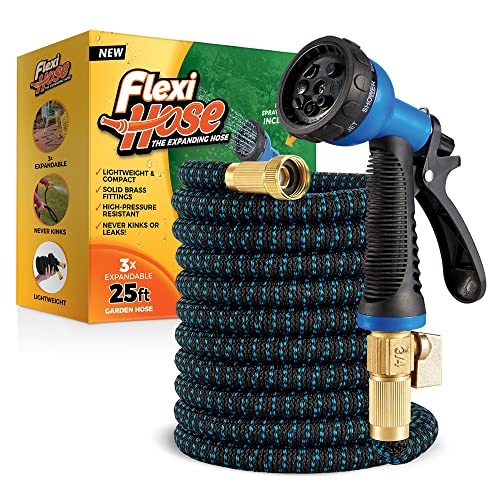
Expandable garden hoses use a two-layer design. The inner layer is an elastic bladder made of latex or TPE. The outer layer is a woven polyester fabric that protects the bladder. End fittings are usually brass or reinforced plastic. The sealed connection keeps water pressure inside the bladder. This pressure causes the hose to extend. Water pressure in most U.S. homes ranges between 40 and 80 PSI, which is ideal for these hoses. Knowing the materials helps explain how does expandable garden hose work and why it expands under pressure.


Components and common types
Key parts and types clarify function. Read these lists to better understand how does expandable garden hose work for different models and sizes.
Key components
- Inner bladder (latex or TPE) that inflates with water
- Outer woven fabric sleeve for protection
- Solid brass or reinforced plastic fittings (3/4 inch common in the USA)
- Nozzle or spray gun with adjustable patterns
- Rubber washer to ensure a leak-free seal at the faucet
Common types and sizes
- Pocket or coiled hoses (compact, often 25 ft collapsed)
- Standard expandable hoses (25 ft, 50 ft, 100 ft expanded lengths)
- Heavy-duty models with double latex cores for higher pressure
- Lightweight models for small yards and container gardens
- Commercial-grade options with reinforced fabric for longer life

How to use and maintain (step-by-step)
Follow these steps for safe use and long life. Each step is short and practical for U.S. homeowners.
Attach securely
Screw the hose fitting onto a standard outdoor faucet (3/4 inch is common). Use the included rubber washer. This connection shows the first stage of how does expandable garden hose work by sealing water into the inner bladder.
Turn water on slowly
Open the faucet gradually. Slow pressurization lets the inner bladder expand without sudden stress. Typical home pressure of 40 to 80 PSI will inflate most hoses.
Watch it expand
As water flows, the hose stretches and reaches its full length. This visible growth demonstrates how does expandable garden hose work in real time.
Use and adjust nozzle
Set the spray pattern you need. Reduce pressure or flow if the bladder shows strain. Many nozzles have a shutoff to save water during breaks.
Turn off, drain, and store
Shut off the faucet, open the nozzle to drain all water, then let the hose contract. Store it out of direct sun and off cold concrete in winter to extend life.

Advantages and disadvantages
Expandable hoses are built for convenience. They suit many American yard tasks, but have limits. Below are quick lists to weigh the choice.
Advantages
- Lightweight and easy to carry for mowing or washing the car
- Collapses to save space in a garage or shed
- No-kink performance compared to traditional rubber hoses
- Affordable and available at big-box stores across the USA
- Demonstrates clearly how does expandable garden hose work with simple pressure-driven expansion
Disadvantages
- Can be punctured by sharp objects or pet teeth
- Less suited to high-pressure commercial use unless rated
- Some models wear faster in direct sun or freezing winter climates
- Often require careful draining to avoid damage during storage
Frequently asked questions
Short answers to common buyer and user questions for U.S. homeowners.
Yes. Most expandable hoses deliver clean tap water just like a regular hose. They do not leach harmful materials when used normally. Follow manufacturers’ guidelines. Understanding how does expandable garden hose work can reassure you that flow is controlled by common household pressure.
Most hoses are rated for standard household pressure (40-80 PSI). Heavy-duty models list higher PSI ratings. Check the product label to match your home pressure. Over-pressurizing can damage the inner bladder.
Do not leave an expandable hose outside in freezing weather. Freeze expansion can rupture the inner bladder. Drain it fully and store indoors in cold months, especially in northern U.S. states.
Lifespan varies by build quality and care. With proper use, good drainage, and storage out of UV and cold exposure, many users get several seasons. Regular inspection for wear helps prevent sudden failure.
conclusion
Now you know how does expandable garden hose work and what to expect. The system is simple: water pressure inflates an inner bladder while a tough outer sleeve protects it. For many U.S. homeowners, expandable hoses offer a space-saving, no-kink alternative to traditional hoses. Try one at a local hardware store or online, and follow the care steps above to get the best life from your hose.