

Are you staring at that wall-mounted mirror, wondering how to take it off without causing damage? Removing a mirror might seem tricky, but with the right steps, you can do it safely and easily.
Whether you’re redecorating, moving, or just need to clean behind it, knowing the proper way to remove your mirror will save you time and stress. Keep reading, and you’ll discover simple tips that protect your walls and keep you safe while handling your mirror like a pro.
Tools Needed
Removing a wall-mounted mirror needs the right tools. Using proper tools makes the task safer and easier. It helps protect your walls and the mirror from damage. Prepare all tools before starting. This saves time and avoids interruptions.
Basic Tools Checklist
- Screwdriver (flathead and Phillips)
- Utility knife or razor blade
- Putty knife or thin pry bar
- Measuring tape
- Stud finder (optional)
- Bucket or container for screws and parts
- Soft cloth or towel to rest the mirror
Safety Gear Essentials
- Safety glasses to protect your eyes
- Work gloves to protect your hands
- Mask to avoid dust inhalation
- Non-slip shoes for stable footing

Credit: www.amazon.com
Preparing The Area
Preparing the area is the first step before taking off a wall-mounted mirror. It helps protect your walls, floors, and nearby items from damage. A safe workspace makes the job easier and quicker.
Clear space and protect surfaces. Small efforts prevent big problems later.
Clearing The Surrounding Space
Remove furniture and objects near the mirror. Give yourself plenty of room to move. This lowers the chance of knocking things over. Keep pets and children away from the area. It helps avoid accidents and distractions.
Clear the floor under the mirror. This prevents tripping or stepping on objects. A clean space lets you focus on removing the mirror safely.
Protecting Walls And Floors
Use painter’s tape around the mirror’s edges on the wall. It shields the paint from scratches and dents. Place a drop cloth or old blanket on the floor below. It catches dust and any falling debris. Soft padding also protects the mirror if it falls.
Wear gloves to keep your hands safe. Protect your eyes with safety glasses. These simple steps reduce injury risks during removal.
Identifying Mounting Type
Before removing a wall-mounted mirror, knowing how it is attached is key. Different mirrors use different mounting types. This affects the tools and steps needed for safe removal. Learning to identify the mounting type prevents damage to your wall and mirror.
Common Mounting Methods
Mirrors often hang using brackets, clips, or cleats. Some use screws directly into the wall. Others rely on adhesive strips or hooks. Brackets hold the mirror on the top or bottom edges. Clips grip the sides and corners tightly. Cleats are two pieces that lock together behind the mirror and wall. Each method needs a different way to remove the mirror.
Spotting Hidden Fasteners
Fasteners may hide behind the mirror frame or under a decorative border. Look closely around the edges for small screws or clips. Tap gently on the mirror to hear if parts are loose or fixed. Shine a flashlight at an angle to see shadows of hidden brackets. Some mirrors have a removable frame to reveal mounting points. Identifying these fasteners helps you remove the mirror safely without damage.
Removing The Mirror Safely
Removing a wall-mounted mirror needs care and attention. Mirrors are fragile and can break easily. Safety must come first to avoid accidents and damage. Use the right tools and follow steps slowly. Wear gloves and protective eyewear for extra safety. Clear the area around the mirror to avoid trips and falls.
Loosening Clips And Brackets
Start by identifying the clips or brackets holding the mirror. Use a screwdriver to loosen screws carefully. Do not force the mirror; loosen all fasteners evenly. Gently wiggle the mirror to free it from clips. Keep a firm grip to prevent it from falling. Place the mirror on a soft surface once removed.
Detaching Adhesive Mounts
Check if the mirror is stuck with adhesive strips or glue. Use a hairdryer on low heat to soften the adhesive. Slowly slide a plastic putty knife or wire between the wall and mirror. Move the tool gently to avoid cracking the glass. Pull the mirror away carefully as the adhesive loosens. Clean the wall surface after removal to remove residue.
Handling Heavy Or Large Mirrors
Large mirrors need two or more people to lift safely. Plan the path before moving the mirror. Use thick gloves to protect your hands. Hold the mirror from the bottom and sides firmly. Avoid sudden movements to keep balance. Place the mirror on a padded surface to prevent damage.
Preventing Wall Damage
Removing a wall-mounted mirror can be tricky. It often risks damaging the wall behind it. Preventing wall damage is important to keep your room looking nice. Using the right methods helps protect your paint and drywall. Taking care also saves you time and money on repairs.
Using Proper Techniques
Start by loosening the mirror gently. Use a flat tool like a putty knife to pry it off. Work slowly to avoid pulling paint or drywall. Support the mirror’s weight with your hands. Remove screws or brackets carefully before lifting the mirror. Clean off any leftover adhesive with warm water and soap.
Avoiding Common Mistakes
Do not yank the mirror quickly. Avoid using sharp tools that can gouge the wall. Never pull from the top edge alone. Skipping the removal of screws causes wall damage. Do not ignore cracks or loose spots around the mirror. Take your time and check progress often.
Post-removal Wall Care
After removing a wall-mounted mirror, the wall often needs care. Small holes and marks usually remain. Fixing these helps the wall look smooth and clean again.
Proper wall care keeps your room looking fresh. It also prepares the space for new decorations or paint. Follow simple steps to repair and refresh your wall easily.
Filling Holes And Cracks
First, check the wall for holes and cracks left by the mirror. Use a putty knife to apply spackling paste or wall filler. Press the filler firmly into each hole to fill it completely. Let the filler dry according to the product instructions. After drying, sand the area gently with fine sandpaper. This makes the surface smooth and even with the wall.
Repainting And Touch-ups
Match the paint color to your existing wall shade. Use a small brush or roller for precise application. Apply paint over the repaired areas carefully. For better coverage, add a second coat after the first dries. This restores the wall’s original look and hides any repair marks. Allow the paint to dry fully before moving furniture back or hanging anything new.
Tips For Reinstalling Or Relocating
Reinstalling or relocating a wall-mounted mirror requires care and planning. The right spot and proper securing keep the mirror safe and looking great. Follow these tips for a smooth process.
Choosing The Right Spot
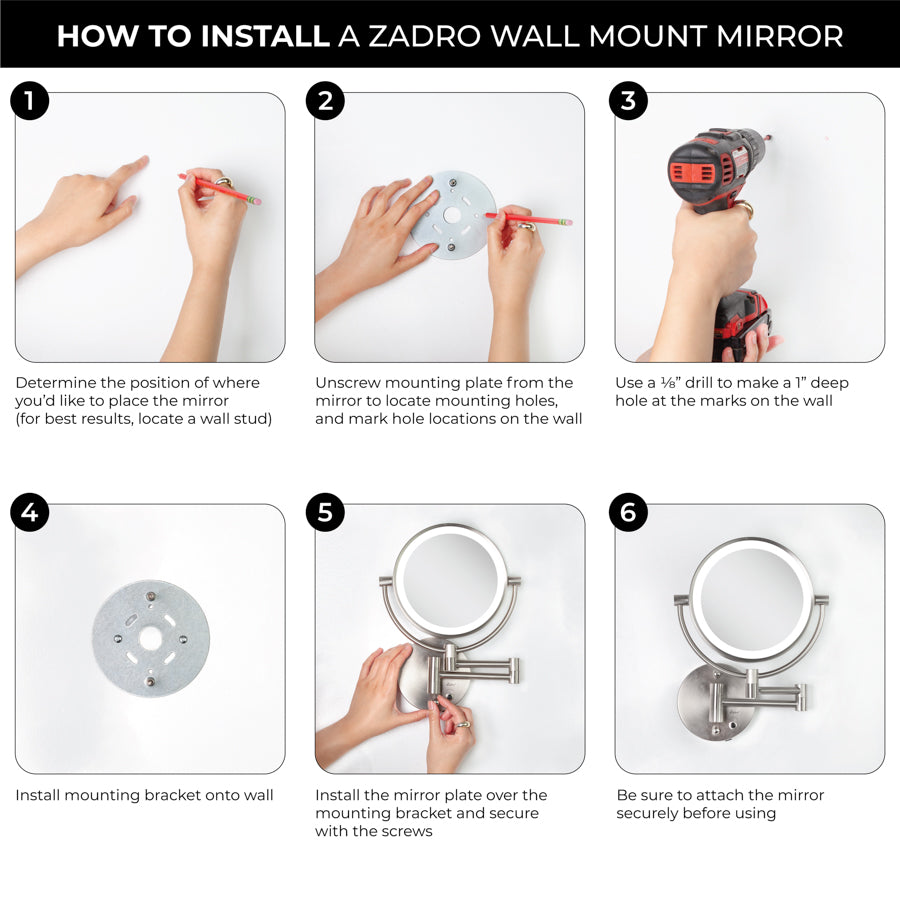
Pick a spot with solid walls. Drywall alone may not hold heavy mirrors well. Look for studs behind the wall for strong support. Avoid areas with direct sunlight to prevent damage. Ensure the height fits your daily use. Check the wall surface is clean and dry. Measure the space before marking the spot. Keep the mirror away from doors that open wide.
Securing The Mirror Correctly
Use proper anchors or screws designed for your wall type. Heavy mirrors need heavy-duty anchors or toggle bolts. Mark the drill points carefully using a level. Drill holes slowly to avoid wall damage. Attach the mounting hardware firmly but do not overtighten. Hang the mirror gently and check it is stable. Double-check the mirror is straight before finishing. Use safety brackets for extra security in busy areas.

Credit: bathtrendsusa.com
Credit: zadroinc.com
Frequently Asked Questions
How Do You Safely Remove A Wall Mounted Mirror?
To safely remove a wall mounted mirror, first gather tools like a screwdriver and gloves. Carefully loosen screws or brackets holding the mirror. Have a helper support the mirror to prevent dropping. Gently lift and detach the mirror from the wall.
What Tools Are Needed To Take Off A Wall Mirror?
Essential tools include a screwdriver, gloves, a utility knife, and a pry bar. These help loosen screws, cut adhesive, and safely detach the mirror. Using proper tools minimizes damage to the wall and ensures safe mirror removal.
How To Avoid Wall Damage When Removing A Mirror?
Use gentle pressure and proper tools like a utility knife to cut adhesive. Loosen screws carefully without stripping them. Support the mirror while removing to prevent sudden falls. Patch any small holes after removal for a smooth wall finish.
Can I Remove A Mirror Glued To The Wall?
Yes, but it requires extra care. Use a utility knife to cut the adhesive around the edges. Slowly and gently pry the mirror away using a thin tool. Wear gloves to protect from broken glass during removal.
Conclusion
Removing a wall-mounted mirror can be simple and safe. Take your time and follow each step carefully. Use the right tools to avoid damage to walls or glass. Always ask for help if the mirror is heavy or large. Check the wall for any leftover marks or holes after removal.
Fix these spots before hanging a new mirror or painting. With patience and care, you can finish this task without trouble. Now, you can enjoy a fresh look in your room.