

Build a modular base, choose a pull-out or tri-fold frame, then upholster comfortably.
If you want to learn how to build sectional sofa sleeper that looks custom, fits your room, and lasts for years, you are in the right place. I have built sofas for small homes, rentals, and family rooms. In this guide, I share clear steps, proven layouts, and real tips from the shop so you can build a sleeper that is safe, strong, and cozy.

Project overview and plan
A sectional sleeper is a modular sofa with a hidden bed. You can build it with simple tools and a few sheets of plywood. The key is a strong base, a smooth sleeper frame, and good cushions.
Skill level
- Beginner to intermediate DIYers with basic tool use.
Time
- Two weekends for the build.
- One weekend for upholstery.
Budget
- 450 to 1,800 USD, based on fabric, foam, and hardware.
Why this plan works
- It uses standard sizes and proven joints.
- It fits doors and stairs in most homes.
- It scales to L or U shapes.
How to build sectional sofa sleeper is a plan you can follow in steps. Pick your layout, pick your sleeper type, and then build each module. Keep parts light and easy to move.
Common layouts
- L-shape with a chaise for storage and stretch-out space.
- U-shape for big rooms and movie nights.
- Two-piece corner for small rooms.
Sleep sizes
- Full: 54 by 75 inches.
- Queen: 60 by 80 inches.
Open space needed
- Leave 86 to 92 inches in front to pull the bed out.
Safety first
- Wear eye and ear protection.
- Use a mask when you cut or sand.
You will see the term how to build sectional sofa sleeper many times in this guide. That helps you follow each step with the right focus.

Tools and materials
Tools
- Circular saw or track saw.
- Drill and driver set.
- Pocket hole jig or dowel jig.
- Orbital sander.
- Staple gun for upholstery.
- Chisels and a flush trim router bit.
- Measuring tape, square, clamps.
Wood and panels
- 3 sheets of 3/4 inch plywood for bases.
- 1 sheet of 1/2 inch plywood for decks.
- 1×3 or 1×4 hardwood for rails and trim, optional.
Hardware
- Pocket screws or confirmat screws.
- Furniture corner brackets.
- Bed rail brackets for modules.
- 2 to 4 locking casters for pull-out.
- Heavy duty full extension slides or a trundle runner kit.
- Piano hinges or tri-fold hinges.
- Webbing or slats.
- T-nuts and bolts for legs.
- Magnetic catches or straps.
Foam and fabric
- Seat foam, 2.4 lb density, 28 to 35 ILD for support.
- Back foam or loose fill, softer feel.
- 2 inch memory foam topper for the mattress surface, optional.
- Batting, dust cover fabric, decking fabric.
- Performance upholstery fabric, 12 to 16 yards based on size.
- Zippers for covers.
Finish
- Water-based polyurethane or paint for exposed wood.
- Spray adhesive for foam.
I keep extras on hand. Screws, staples, and felt pads go fast. A good staple remover saves time if you make a mistake while you work on how to build sectional sofa sleeper.

Design and dimensions
Seat comfort
– Seat height: 17 to 18 inches with cushion.
- Seat depth: 22 to 24 inches for lounge comfort.
- Back height from floor: 30 to 34 inches.
- Plan for a queen if you have space.
- A queen needs about 64 inches clear width in the sofa frame.
Clearances
- Leave 3 inches behind the sofa for air flow.
- Leave room for the pull-out. Do a tape outline on the floor.
- Door check: Each module should fit through a 30 inch door.
Structure
- Base boxes: 3/4 inch plywood with glue and screws.
- Corner blocks add strength.
- Use pocket holes inside for a clean look.
Best practice from the shop
- Add a full top deck over the base for even load.
- Use slats at 2.5 inch gaps for breath and bounce.
- Label every part. Put arrows for front and top.
How to build sectional sofa sleeper starts with a sketch. Draw your room, draw the open bed, and mark walk paths. That simple step avoids most layout fails.
Build the base modules
Cut and prep
- Break down plywood into panels for each box.
- Typical box: 30 by 30 inches for seats, 30 by 60 inches for chaise.
- Edge sand parts to remove splinters.
Assemble boxes
- Dry fit first. Check square with a diagonal tape check.
- Glue and screw sides to the bottom panel.
- Add corner blocks inside. Add a mid brace.
Add decks and legs
- Deck the top with 1/2 inch plywood or slats.
- Add legs at corners using T-nuts. Or build a plinth base.
- Shoot for 6 inches leg height to allow cleaning.
Join modules
- Use bed rail brackets or metal connectors between boxes.
- Add two per joint, front and back, for no racking.
Storage chaise option
- Hinge the chaise deck with soft close lid supports.
- Add a finger pull slot to avoid handles that snag.
I learned to pre-drill and use glue on every joint. It stops squeaks. It also helps when you shift the sofa on wood floors. How to build sectional sofa sleeper works best when the base is silent and rigid.

Build the sleeper frame
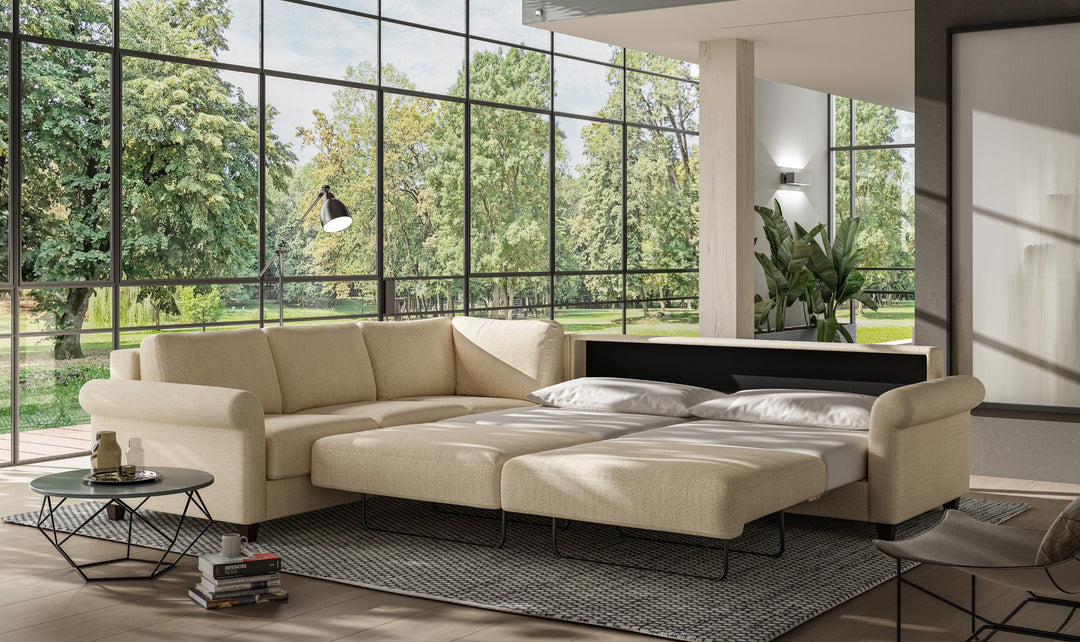
You have three good options. Pick one and stick with it.
Option 1: Pull-out trundle platform
- Build a low cart with a frame that is 1 inch smaller than the mattress.
- Use locking casters rated for 100 lb each.
- Top the cart with slats and a thin deck.
- Add a front face panel that blends with the sofa.
- Add pulls or fabric straps under the cushion front.
Option 2: Tri-fold platform
- Make three panels from 1/2 inch plywood with slats.
- Join with piano hinges.
- The front panel sits under the seat. It folds out to full length.
Option 3: Sleeper mechanism kit
- Buy a commercial queen or full unit.
- Bolt it to a steel or hardwood frame per the manual.
- This costs more but feels like store units.
Recommended for most homes: the pull-out trundle. It is simple, safe, and smooth.
Steps for the pull-out
- Build a tray inside the main sofa base. Use hardwood runners or slides.
- The trundle slides out on the runners.
- Add a second folding panel hinged to the trundle. It flips up to meet seat height.
- Use support legs that swing down on the flip panel.
- Test the load with two adults before upholstery.
Key notes
- Keep fingers safe with soft edges and slow-close where you can.
- Block the casters so the bed does not drift.
- Add a stop so the trundle cannot pull out too far.
How to build sectional sofa sleeper hinges on this stage. Smooth motion is the difference between joy and a fight at midnight.
Mattresses and cushions
Sleeper comfort
- Use a 4 to 5 inch high resilience foam core for a light build.
- Add a 1 to 2 inch memory foam topper for pressure relief.
- Wrap with batting to soften edges.
Seat cushions
- Two-layer seats feel great. Firm base foam with a soft topper.
- 5 inch total foam height is a good target.
- Use zippered covers so you can wash or swap.
Back cushions
- Loose fill gives a hug feel.
- Foam backs hold shape better in rentals.
Covers
- Use performance fabric that resists stains.
- Add hidden zips on the back edge.
- Pre-wash fabric if it can shrink.
Tip from many builds: round the front edge of the deck with a small radius. Cushions live longer and feel nicer to legs. When you plan how to build sectional sofa sleeper, do not skimp on foam quality. It is the comfort engine.

Upholstery steps
Prep the frame
- Install webbing or a deck cloth to hide the box.
- Smooth all edges with sand and a thin felt strip on sharp spots.
Wrap and staple
- Lay batting over arms and backs.
- Pull fabric snug, not drum tight.
- Staple from center outward to avoid waves.
Seams and details
- Use piping for a tailored look, or keep it plain for speed.
- Match patterns at visible corners.
- Add Velcro along the deck to keep cushions in place.
Cushion sewing
- Sew boxing strips to top and bottom panels.
- Add zippers to a back seam.
- Stuff and test fit before you finish the last seam.
I keep a small steam iron near the bench. A touch of steam relaxes fabric and hides small puckers. How to build sectional sofa sleeper often comes down to neat upholstery. Take your time here.
Final assembly and safety checks
Dry fit
- Join modules with connectors.
- Set the trundle and test travel.
- Test the fold panel and legs.
Load test
- Sit, lie down, and roll on the bed with two people.
- Listen for squeaks. Tighten any loose screws.
- Add felt between metal parts if you hear rubbing.
Safety
- Add child-safe locks if you have kids.
- Keep bedding clear of casters.
- Add anti-tip blocks if the bed feels front-heavy when open.
Document your steps with small marks inside the frame. Future you will thank you. How to build sectional sofa sleeper is easier to service when you label hinge pins and stops.

Finishing and styling
Wood finish
- Seal visible wood with water-based poly.
- Light sand between coats for a clean touch.
Legs and trim
- Choose low, wide legs for stability.
- Add corner trim if you like a built-in look.
Style the sofa
- Use two seat cushions on an L shape for fewer gaps.
- Keep a low basket in the chaise for bedding.
- Pick throw pillows that help back height for shorter guests.
Small design moves add a lot. A simple strap to pull the bed. A clean face panel. These details make your how to build sectional sofa sleeper feel pro.
Maintenance and troubleshooting
Care
- Vacuum fabric each week.
- Blot spills at once. Do not rub.
- Rotate seat cushions every month.
Fix squeaks
- Tighten joint screws each season.
- Add wax to slides and runners.
- Slip felt between wood parts.
Sag control
- Add a mid support block under long spans.
- Replace webbing when it loosens.
- Swap cushion foam layers if they tire.
Store bedding
- Use breathable bags.
- Let the mattress air out once a month.
Parts wear out. That is okay. A well-built frame lets you service it. That is a key win of how to build sectional sofa sleeper versus a cheap store buy.
Budget and timeline
Cost ranges
- Wood and fasteners: 150 to 350 USD.
- Hardware and slides: 80 to 220 USD.
- Foam and batting: 180 to 650 USD.
- Fabric and zips: 120 to 600 USD.
- Legs and trim: 40 to 120 USD.
Time plan
- Day 1: Cuts and base boxes.
- Day 2: Joiners, decks, and test fit.
- Day 3: Sleeper frame and slides.
- Day 4: Foam cut and sewing.
- Day 5: Upholstery and final checks.
Pro tip
- Buy foam and fabric first. Then adjust box sizes to fit real material widths. It trims cost and waste for your how to build sectional sofa sleeper.
Mistakes to avoid and pro tips
Avoid
- Skipping a full deck under cushions.
- Using thin plywood on load parts.
- Forgetting door and stair checks.
- Tight fabric that creases at corners.
- Tall skinny legs that can wobble.
Do
- Round front edges. It saves fabric and foam.
- Use two connectors per joint.
- Lock casters on the trundle.
- Add stops on slides.
- Use labels and arrows on hidden parts.
From my early builds, I learned to test with full bedding on. Sheets add drag and change how panels meet. That small test makes how to build sectional sofa sleeper smooth in daily life.
Advanced options if you want more
Upgrades
- Add USB-C ports in the arm with a low-voltage kit.
- Use breathable decking fabric for cooler sleep.
- Add a storage drawer under the chaise.
Green choices
- FSC plywood where you can.
- Water-based finishes.
- Recycled performance fabric.
Guest comfort
- Use a topper in a zip bag. Store it in the chaise.
- Offer two pillow types. One soft, one firm.
These touches turn your how to build sectional sofa sleeper into a guest favorite.
Frequently Asked Questions of how to build sectional sofa sleeper
What is the best sleeper type for beginners?
A pull-out trundle is the simplest for most DIYers. It uses basic joins, common parts, and it is easy to fix later.
How much weight can a DIY sleeper hold?
A well-built trundle with 3/4 inch plywood and good slides can hold two adults. Use mid supports and quality casters rated for the load.
What foam should I use for seat cushions?
Use 2.4 lb density foam with medium firmness for seats. Add a soft topper for comfort and a zip cover for easy care.
Can I make it modular for moving?
Yes, build in two or three base boxes with connectors. Keep each box under 80 pounds and 30 inches wide to fit doors.
How do I stop squeaks over time?
Glue and screw all joints, then re-tighten each season. Add felt or wax at slide contact points and check caster bolts.
Conclusion
You now have a clear plan to build a strong, cozy, and smart sleeper. Measure your room, pick your layout, and take it step by step. Use solid wood, a smooth pull-out, and good foam, and your guests will sleep well.
Start your cut list today and block off a weekend. If you want more build sheets or sewing tips, subscribe for updates or drop a question in the comments. Your how to build sectional sofa sleeper can be the best seat, and the best bed, in your home.