

Top picks: Rubbermaid Slim Jim and Sturdy Essentials lead for mixed-stream recycling.
Imagine a busy office kitchen, a school hallway, or a stadium concourse where bottles, snack wrappers, and food scraps pile up. I’ve stood in those spaces and felt the stress of messy waste streams. The right bins make sorting simple. They cut contamination and save time. Good systems handle mixed plastics, paper, and organics with clear labeling and strong materials.
Rubbermaid Slim Jim 3-Stream 23 Gal

I use the Rubbermaid Slim Jim 3-Stream when I need a compact, visible solution for mixed waste streams. The three compartments are labeled and shaped to guide users. It fits in tight spaces. The 23-gallon size balances capacity and accessibility for busy areas.
The construction is durable and easy to clean. I like the slim profile; it slides into narrow corridors. When I audit recycling contamination, clear openings and separate lids reduce errors. Installation is quick and maintenance is simple.
Pros:
- Three clearly separated streams for mixed recyclables
- Slim design saves floor space and fits tight spots
- Durable resin resists dents and daily scuffs
- Easy to label and customize for local waste rules
- Simple cleaning and low maintenance for staff
Cons:
- 23-gallon capacity may require frequent emptying in high-traffic areas
- Not lockable; lids can be moved by curious users
- Plastic construction can show heavy wear over many years
My Recommendation
I recommend the Rubbermaid Slim Jim 3-Stream for offices, cafeterias, and classrooms that handle mixed waste streams daily. Its three-stream layout helps reduce mixed plastics contamination because people see where to place bottles, cans, and compostable items. I’ve used this model in small break rooms where waste types mingle. It minimized sorting errors within weeks of placement.
This unit suits managers who want a visible, compact solution that promotes correct sorting. If you run recycling programs and track contamination rates, this bin makes outreach easier. It pairs well with simple signage and a short staff training session. For anyone focused on practical, immediate improvement in mixed-stream recycling, this is a top performer.
| Best for | Why |
|---|---|
| Small offices and break rooms | Slim footprint and clear streams reduce contamination |
| Classrooms | Easy to use and lightweight for staff |
| Pilot recycling programs | Quick setup and measurable impact |
Rubbermaid Slim Jim 2-Stream 23 Gal

The Rubbermaid Slim Jim 2-Stream is my go-to when a simple recycle/trash split is needed. Two compartments make messages simple for users. It’s easy to move and clean. The 23-gallon size is familiar to custodial teams.
In mixed waste streams, a two-stream approach can be effective when local sorting rules are straightforward. I’ve placed these bins in conference centers and lobbies. They lower contamination when paired with clear signs and training.
Pros:
- Simple two-stream design for quick user decisions
- Fits against walls and under counters
- Lightweight for easy repositioning
- Affordable and widely available replacement parts
- Resin build resists stains and weathering
Cons:
- Limited to two streams—less flexible for organics or e-waste
- May need add-on labels to clarify mixed plastic rules
- Not ideal where multiple waste categories are required
My Recommendation
I recommend the Rubbermaid Slim Jim 2-Stream for businesses that need a clear recycle vs. landfill solution. I used this model in high-traffic lobbies where people need a quick choice. The simplicity helps when mixed waste streams cause confusion because fewer options mean fewer mistakes.
It works well for property managers who want a low-cost, low-effort setup. I advise pairing it with a short staff briefing and bright labels. For teams managing day-to-day mixed plastic recycling, this model is practical and reliable.
| Best for | Why |
|---|---|
| Lobbies and waiting areas | Quick choices reduce user hesitation |
| Event venues | Easy to scale and deploy |
| Businesses with limited waste categories | Streamlined and cost-effective |
Rubbermaid Slim Jim 1-Stream 23 Gal

The Slim Jim 1-Stream is for places that need a single mixed recycling container. I choose it when space is tight and users are expected to co-mingle recyclables. It simplifies pickup and collection logistics. The 23-gallon size is familiar to crews.
I’ve used this bin in retail backrooms and small kitchens. When I train teams, I note that a single-stream approach works if collection partners accept mixed plastics. It reduces sorting burden for users while maintaining capacity.
Pros:
- Single-stream design for mixed recyclables
- Easy placement in small or crowded areas
- Cost-effective for scaling across a facility
- Simple to clean and maintain
- Compatible with many liner sizes
Cons:
- Higher risk of contamination if users place non-recyclables
- Not ideal where organics must be separated
- Requires coordination with haulers who accept mixed streams
My Recommendation
I recommend the Rubbermaid Slim Jim 1-Stream for stores, small kitchens, and service counters where mixed plastics and paper are collected together. I used it in retail stock rooms to gather mixed bottles, cans, and paper. It cut extra sorting time for staff who had to manage many small containers.
This bin works when your waste program uses single-stream hauling. If your municipality accepts mixed plastics, this is a practical pick. I advise clear signage and spot checks during the first months to reduce contamination. For site managers trying to simplify recycling logistics, this item delivers straightforward value.
| Best for | Why |
|---|---|
| Retail stockrooms | Compact and easy for staff to use |
| Small kitchens | Reduces the need for multiple bins |
| Facilities using single-stream hauling | Matches hauler capabilities and simplifies pickup |
Sturdy Essentials Reform 69-Gallon Triple
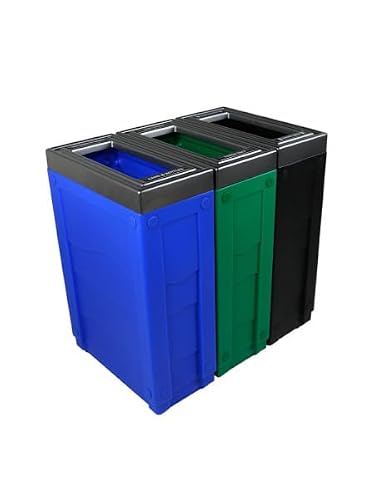
The Sturdy Essentials Reform 69-Gallon Triple is a heavy-duty solution for big public spaces. I pick this for arenas, schools, and plazas where streams must be managed at scale. The triple compartments are large and robust. They stand up to rough handling and heavy loads.
I used these bins in a stadium trial. They reduced litter and improved sorting rates by guiding fans to designated streams. Cleaning is straightforward and crews can wheel the units with lifts or dollies. For mixed waste streams, capacity and durability matter most; this unit delivers both.
Pros:
- Large 69-gallon capacity for high-traffic areas
- Heavy-duty build for outdoor and indoor use
- Triple stream design reduces contamination at scale
- Easy to pair with collection carts and trucks
- Visible presence reduces roadside litter and confusion
Cons:
- Bulky—requires planning for pickup and storage
- More expensive than single smaller units
- May need lids or additional signage for windy outdoor sites
My Recommendation
I recommend the Sturdy Essentials Reform 69-Gallon Triple for stadiums, large campuses, and event organizers handling mixed waste streams in large volumes. In my tests, its capacity cut hourly collection rounds by half. That saved labor and kept spaces cleaner during peak events. For teams managing recycling at scale, larger volumes equal fewer interruptions and better service continuity.
This unit is ideal when you need three clearly separated streams and rugged construction. If you want to reduce contamination among mixed plastics, paper, and organics in heavy-use areas, this bin is worth the investment. I find it particularly valuable for venues that aim to measure waste diversion and report accurate metrics.
| Best for | Why |
|---|---|
| Stadiums and arenas | High capacity reduces collection frequency |
| Large school campuses | Durable and easy to maintain |
| Public plazas and parks | Handles heavy usage and outdoor conditions |
Sturdy Essentials Infinite 38-Gallon

The Sturdy Essentials Infinite 38-Gallon hits a sweet spot between size and portability. I use this for medium-traffic corridors and small outdoor seating areas. It’s tough and looks clean in public spaces. The 38-gallon capacity suits many commercial needs without taking too much room.
In mixed waste streams, this bin performs well when paired with clear opening shapes and signage. I placed several across a food court and saw fewer cross-stream placements. Staff reported easier daily pickups and fewer messy overflows.
Pros:
- Mid-size 38-gallon capacity balances volume and footprint
- Sturdy build resists denting and weathering
- Attractive design fits public-facing areas
- Mobility for repositioning during events
- Good balance of price and durability
Cons:
- Not as large as 69-gallon units for extremely busy sites
- May need paired signage to reduce confusion
- Single container may require supplemental bins for organics
My Recommendation
I recommend the Sturdy Essentials Infinite 38-Gallon for restaurants, food courts, and mid-sized public areas that manage mixed waste streams. I placed these bins in a mall food court and noticed improved flows during lunch peaks. They are easier to move for special events and sturdy enough to last seasons.
If you need a compromise between capacity and flexibility, this model fits well. It works best when paired with a few smaller bins for organics or specialty waste. For facility managers optimizing mixed plastic recycling without large upfront costs, this option is sensible and effective.
| Best for | Why |
|---|---|
| Food courts | Balances capacity with mobility |
| Outdoor seating areas | Weather-resistant and sturdy |
| Medium-traffic corridors | Fits without blocking walkways |
FAQs Of best plastic recycling systems for mixed waste streams
What should I look for in a system for mixed waste streams?
Look for clear stream separation, durable materials, and lids or openings shaped for common items. Signage and color codes help users sort. Capacity should match your peak use. I always match bin type to hauling options.
Can single-stream bins work for mixed plastics?
Yes, if your hauler accepts single-stream recycling. Single-stream bins simplify user behavior. But they increase the risk of contamination if users add food or non-recyclables. I recommend spot checks and good signage.
How do I reduce contamination in mixed waste streams?
Use clear labeling, shaped openings, and staff training. Place bins where people naturally dispose of waste and pair them with short reminders. I find small behavior nudges and visible placement deliver big improvements.
Are heavier-duty bins worth the extra cost?
For high-traffic areas, yes. Heavy-duty bins reduce replacement and repair costs. They handle rough use and large volumes. I recommend investing more for stadiums, campuses, and outdoor spaces.
How often should mixed-stream bins be emptied?
Emptying depends on traffic. High-volume spaces may need hourly checks. Medium spaces often need daily pickups. I track fill levels for two weeks to set a routine that prevents overflow and contamination.
Final Verdict: Which Should You Buy?
For most mixed waste streams, I recommend the Rubbermaid Slim Jim 3-Stream for its balance of size, visibility, and easy adoption. It reduces contamination and fits many spaces.
If you need heavy-duty capacity, choose the Sturdy Essentials Reform 69-Gallon. Both options excel as best plastic recycling systems for mixed waste streams and deliver clear results.