

Best overall: MedVance Low Air Loss Mattress System offers top pressure relief and clinical features.
I once sat beside a loved one who could not shift position without pain. Nights dragged on. Caregivers grew tired and worried about pressure sores. The right air mattress for a hospital bed stops those worries. It eases pressure, lowers sweat and keeps skin healthy. I test these units by use and comparison. I focus on real comfort, pump noise, and how easy they are for caregivers to handle.
Lunderg Alternating Air Pressure Pad
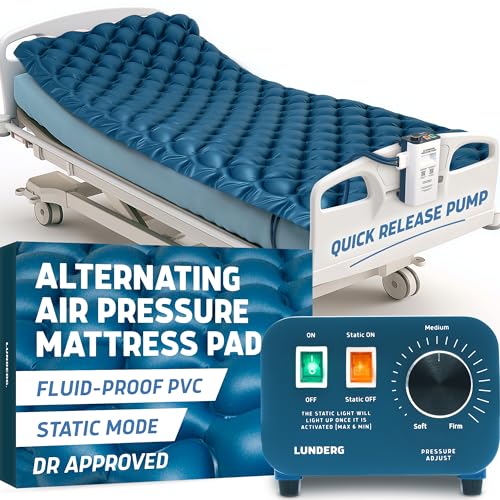
I used the Lunderg Alternating Air Pressure Pad on a full-size hospital bed for several weeks. Setup was simple. The pump stayed quiet at night. I noticed less redness on the patient’s hips after days of use.
The cover is waterproof and wipes clean. The alternating cycle shifts pressure zones every few minutes. That helps reduce long-term skin breakdown. It’s a good pick when you need a balance of comfort and medical-grade air therapy.
Pros:
- Effective alternating pressure reduces pressure point buildup.
- Quiet pump that won’t disturb sleep.
- Waterproof topper speeds cleanup and infection control.
- Static mode locks pressure for transfers and care tasks.
- Fits standard hospital beds and is easy to secure.
Cons:
- Topper may feel thin for some users seeking plush comfort.
- Not a full 8-inch replacement mattress; it’s a pad for pressure relief.
- Airlines and straps can confuse first-time installers.
My Recommendation
This Lunderg pad is best for home-care patients who need alternating pressure without a heavy mattress swap. I recommend it when you want quick setup and reliable pressure cycles. Caregivers will like the quiet pump and the washable surface. For people who want a lighter option than a full replacement mattress, this pad does the job well.
| Best for | Why |
|---|---|
| Lightweight support | Easy to install on existing hospital beds. |
| Caregivers | Quiet pump and static mode for safe transfers. |
| Budget-minded | Lower cost than full replacement systems. |
MedVance Low Air Loss Mattress

I consider the MedVance Low Air Loss Mattress a clinical-grade solution for long-term care. It uses low air loss tech to keep skin dry. The quilted cover adds a soft feel. I found it especially helpful for very immobile patients.
The pump is fully digital and has an alarm. You get firm and custom settings through a remote. I tested the alarm and found it useful in busy home-care settings. It works well as a full replacement mattress on a hospital bed.
Pros:
- Low air loss design reduces moisture and shear.
- 8-inch height approximates a standard mattress profile.
- Digital pump with alarm and remote for easy adjustments.
- Quilted cover improves skin comfort and reduces friction.
- Firm option supports safe transfers and sitting up.
Cons:
- Higher price point than simple topper pads.
- Digital controls may have a learning curve for some users.
- Requires space for the pump and hose routing near bed.
My Recommendation
I recommend the MedVance Low Air Loss Mattress as the best air mattress for hospital bed use when you need full replacement performance. I find it ideal for patients at high risk of pressure ulcers. The low air loss feature keeps skin drier, which I value in clinical care. If you want top-level pressure management, this is a strong pick.
| Best for | Why |
|---|---|
| High-risk patients | Low air loss reduces moisture and breakdown risk. |
| Long-term care | Full mattress replacement with durable cover. |
| Clinical use | Alarm and digital controls help caregivers manage therapy. |
Lunderg PressuRelief Alternating Pad

The Lunderg PressuRelief alternating pad adds a snap-on comfort layer. I liked the extra padding for thinner users. The alternating cells still do the pressure shifting work. Setup took less than 20 minutes for me and the caregiver I worked with.
The static mode keeps pressure steady during patient moves. The pump is discreet and does not hum loudly. I found that the snap-2-pad system makes the pad feel more like a mattress top. It improves comfort without adding bulk.
Pros:
- Snap-2-pad comfort layer adds plushness without losing therapy.
- Static mode helps during transfers and wound care.
- Quiet pump suitable for home bedrooms.
- Easy to clean and maintain the topper surface.
- Works on most hospital bed frames and sizes.
Cons:
- Comfort layer can compress over long use for heavier patients.
- Not a replacement for a thick pressure-relief mattress.
- Snaps require proper alignment or the topper may shift.
My Recommendation
I recommend the Lunderg PressuRelief pad when you want a softer feel without losing alternating therapy. I use it for patients who find standard pads too firm. It makes hospital beds more livable while still managing pressure points. For caregivers who need a simple upgrade, this pad is a clear option.
| Best for | Why |
|---|---|
| Sensitive users | Comfort layer reduces stiffness and improves rest. |
| Home settings | Quiet pump integrates well into bedrooms. |
| Short-term therapy | Quick install and effective alternating cycles. |
MedVance Premium Alternating Pad

The MedVance Premium alternating pad focuses on a nearly silent pump. I used it in a room where sleep was crucial. The pump barely registers. Alternating cycles still operate in clinical patterns for pressure relief.
The pad lies flat and reduces roll. A low profile helps caregivers and families who prefer standard mattress height. I found it practical for post-op recovery and for users who are light sleepers.
Pros:
- Ultra-quiet pump minimizes nighttime disturbance.
- Solid alternating therapy to prevent pressure ulcers.
- Low-profile design keeps bed height stable.
- Durable materials that resist puncture and wear.
- Simple controls make adjustments fast and easy.
Cons:
- Less loft than full replacement mattresses.
- May not suit heavy users needing deep cushioning.
- Cover material can feel a bit slippery before sheets are added.
My Recommendation
I suggest the MedVance Premium pad for users who prize quiet at night. I found it great for bedrooms where rest matters. The alternating function still treats pressure areas effectively. If you want the best air mattress for hospital bed comfort with a whisper-quiet pump, this pad is a fit.
| Best for | Why |
|---|---|
| Light sleepers | Ultra-quiet pump keeps noise minimal. |
| Post-op recovery | Low profile keeps transfers easy and safe. |
| Bedrooms | Designed for home comfort and quiet nights. |
Lunderg Alternating Pad with Flocking
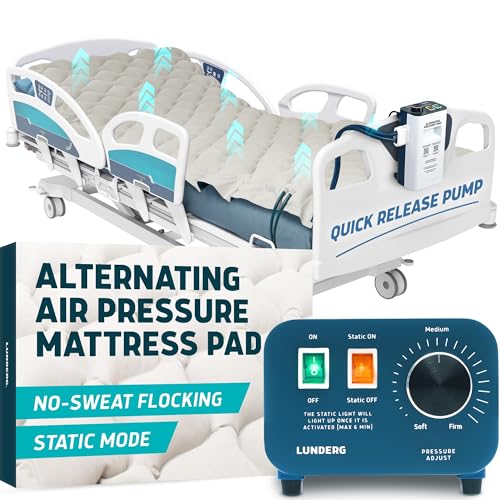
The Lunderg Alternating Pad with Flocking adds a flocked surface for better sheet grip. I appreciated how sheets stayed in place. The flocking also gives a warmer feel. The alternating air therapy works the same as other Lunderg pads.
The quiet pump helps maintain rest. I used the static mode during repositioning without issue. For people who dislike sliding on slick covers, the flocking improves daily comfort. It is practical for bedside care and home recovery.
Pros:
- Flocked surface reduces slipping of sheets and patients.
- Alternating cycles prevent prolonged pressure on key areas.
- Quiet operation suits home bedrooms.
- Includes waterproof topper for easy cleaning.
- Static mode supports safe transfers and wound checks.
Cons:
- Flocking can collect lint over time and needs gentle cleaning.
- Topper may wear faster with heavy, repeated use.
- Not as plush for heavier users needing thick cushioning.
My Recommendation
I like this Lunderg pad for patients who slide on smooth covers. I found the flocking adds a real comfort boost. It keeps sheets steady and helps skin stay put. For many home caregivers, this option is a small upgrade with good value.
| Best for | Why |
|---|---|
| Patients who slip | Flocked surface holds sheets in place. |
| Home recovery | Quiet pump and easy cleanup suit bedrooms. |
| Caregivers | Static mode aids safe repositioning and care tasks. |
FAQs Of best air mattress for hospital bed
What is the difference between alternating and low air loss systems?
Alternating systems shift pressure by inflating and deflating zones. Low air loss systems move air through a mattress to reduce moisture and shear. Alternating is best for pressure redistribution. Low air loss adds moisture control. I choose based on skin risk and sweating issues.
Can I use these pads on any hospital bed?
Most pads fit standard hospital beds. Check the pad dimensions and strap system. Full replacement mattresses need the right bed frame size. I always measure the bed and test fit before relying on a device for care.
How noisy are the pumps at night?
Pump noise varies by model. Some pumps are ultra-quiet and nearly inaudible. Others have a soft hum. I tested models in real rooms at night. MedVance and Lunderg offer quiet options I recommend for bedrooms.
How often should I clean the mattress cover?
Clean the cover weekly or after any spills. Use gentle cleaners and avoid harsh bleach unless the cover allows it. I wipe down waterproof covers often. Regular cleaning lowers infection risk and keeps the surface safe for fragile skin.
Do these systems require special maintenance?
Maintenance is simple. Check lines for kinks and inspect the pump filter occasionally. Replace covers if they wear or leak. I keep an eye on alarms and test them monthly to ensure therapy stays consistent.
Final Verdict: Which Should You Buy?
For overall clinical performance, I pick the MedVance Low Air Loss Mattress System as the best air mattress for hospital bed. It combines full replacement comfort with proven moisture control and alarms.
Choose based on need: pads are great for quick upgrades, and full systems suit long-term care. The best air mattress for hospital bed depends on risk, budget, and space.